Quick answer: In the Indian material handling equipment market, indicative ex-factory dock leveler prices range from ₹65,000 to ₹1,00,000 for manual edge-of-dock units, ₹1,50,000 to ₹2,20,000 for standard 6T to 9T hydraulic swing-lip models, and ₹2,50,000 to ₹3,50,000+ for high-spec telescopic-lip systems. The total landed cost depends on your required dynamic load capacity (6T to 15T), 18% GST, civil pit excavation, freight, and safety interlocks.
Updated November 2026 · By Rudhar Group technical team · Plot No. 628, Pipeline Road, Puth Khurd Village, Bawana, Delhi 110039
When planning a warehouse loading dock, evaluating a dock leveler price involves much more than comparing ex-factory equipment estimates. Commercial buyers must account for the total landed project cost, which encompasses the base machine, applicable taxes, freight, site civil preparation, and installation services. A complete procurement calculation consists of:
Specifying the proper configuration from the outset prevents unexpected downtime and premature equipment failure. Explore our comprehensive engineering options on the hydraulic dock leveler product page to match your facility's operational throughput.
Dock leveler prices vary significantly based on operational mechanism, duty cycle, and structural capacity. Below is an indicative market benchmark for standard configurations across Indian warehousing and logistics facilities. These figures reflect approximate market price estimates (ex-works, excluding 18% GST and installation) to assist engineering and procurement teams with preliminary budgeting.
| Leveler Type & Variant | Dynamic Capacity | Approximate Market Price Range (Ex-Works) | Best Suited Operational Application |
|---|---|---|---|
| Manual Edge-of-Dock (EOD) | 3 Ton – 6 Ton | ₹65,000 – ₹1,00,000 | Light-duty facilities, uniform truck fleets, and retrofits without civil pit cutting |
| Mechanical (Spring-Loaded) | 6 Ton – 10 Ton | ₹1,20,000 – ₹1,60,000 | Remote logistics parks or sites with unreliable three-phase electrical supply |
| Standard Hydraulic Swing-Lip | 6 Ton – 9 Ton | ₹1,50,000 – ₹2,20,000 | Ambient warehousing, 3PL distribution hubs, and standard commercial truck bays |
| Heavy-Duty Hydraulic Swing-Lip | 10 Ton – 15 Ton | ₹2,00,000 – ₹2,65,000 | Heavy manufacturing, paper reels, automotive coils, and heavy forklift cycles |
| Hydraulic Telescopic-Lip | 6 Ton – 15 Ton | ₹2,50,000 – ₹3,50,000+ | Cold storage, dock shelters, reefer trucks, and fully end-loaded sea containers |
| Mobile Yard Ramp / Dock Leveler | 8 Ton – 12 Ton | ₹3,80,000 – ₹5,50,000 | Ground-level factories without raised civil docks needing direct container entry |
To review broader industrial bay setups, check our detailed guide on dock leveler pricing in India.
Industrial dock levelers must withstand rigorous daily impact from loaded forklifts, pallet trucks, and heavy commercial vehicles. Rigorous manufacturing complies with international benchmarks such as EN 1398, which governs dynamic deflection limits, design safety margins, and structural integrity.
| Technical Parameter | Hydraulic Swing-Lip Leveler | Hydraulic Telescopic-Lip Leveler | Edge-of-Dock (EOD) Leveler |
|---|---|---|---|
| Standard Platform Width | 1800 mm to 2130 mm | 1800 mm to 2130 mm | 1800 mm to 2000 mm |
| Standard Platform Length | 2000 mm to 2730 mm | 2000 mm to 3000 mm | Edge-mounted (~400 to 500 mm projection) |
| Operating Range | +300 to +400 mm / −250 to −300 mm | +300 to +400 mm / −250 to −300 mm | +75 mm to −75 mm |
| Lip Extension Reach | 400 mm to 500 mm (hinged swing) | 500 mm to 1000 mm (sliding extendable) | 350 mm to 400 mm (hinged flip) |
| Top Deck Material | 6 mm to 8 mm IS 2062 chequered steel | 6 mm to 8 mm IS 2062 chequered steel | 10 mm to 12 mm high-tensile steel |
| Lip Plate Thickness | 12 mm to 16 mm heavy-duty plate | 12 mm to 16 mm heavy-duty plate | 12 mm to 16 mm chamfered plate |
| Power Pack Rating | 0.75 kW to 1.5 kW (415V, 3-Phase) | 1.1 kW to 1.5 kW (415V, 3-Phase) | Manual lever / optional small hydraulic unit |
| Standard Safety Features | Hydraulic velocity fuse, toe guards | Velocity fuse, toe guards, auto-retract | Mechanical latch, raised dock bumpers |
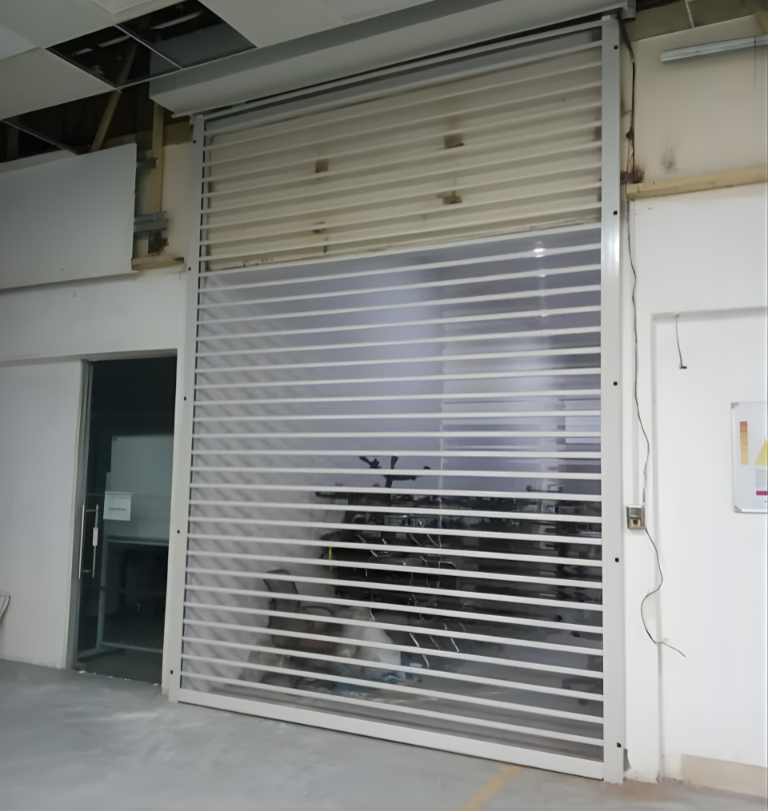
Pairing your leveler with compatible dock shelters and insulated overhead sectional doors prevents air infiltration and maximizes loading bay thermal efficiency.
Understanding what influences dock leveler quotations empowers warehouse planners to allocate capital efficiently. Several primary engineering factors dictate the end cost:
A common mistake is specifying dock levelers based solely on the cargo weight. A leveler rated for 6 tons dynamic capacity accommodates the combined weight of a 3-ton forklift carrying a 2-ton pallet across the moving deck. Moving up to a 10-ton or 15-ton dynamic rating requires heavier longitudinal I-beams or structural steel ribs, thicker 8 mm IS 2062 platform plates, heavier 16 mm lip plates, and upgraded trunnion cylinders, increasing the base manufacturing cost.
Hinged swing-lip levelers represent the most cost-effective solution for ambient warehousing. In contrast, telescopic-lip levelers incorporate precision linear slide channels, an additional hydraulic cylinder, and specialized solenoid valving. This adds 30% to 50% to unit production costs but is essential for cold storage facilities to minimize air exchange or unload tightly packed end-pallets.
Standalone levelers operate using an independent push-button station. However, modern distribution centers frequently implement unified control panels that interlock the dock leveler with external traffic lights, vehicle restraints, and high-speed or sectional doors. Interlocking prevents the leveler from operating until the door is completely raised and the vehicle is restrained, adding electrical complexity to the control architecture.
Standard installations utilize heavy-duty industrial anti-corrosion primer finished with a polyurethane (PU) topcoat. Facilities handling corrosive chemicals, coastal installations, or deep-freeze cold chains often require hot-dip galvanized steel frames to eliminate rust, representing an incremental capital investment.
Proper civil pit construction is critical for operational longevity. Installing a dock leveler into an improperly cast pit can lead to structural twist, premature weld failure, and hydraulic strain.
Adhering to a standardized maintenance protocol extends the operating lifespan of the system. Learn more by reading our dock leveler maintenance checklist.
Follow this checklist when preparing requests for proposals (RFPs) for your industrial warehouse:
Rudhar Group is a recognized Indian industrial door and loading bay equipment manufacturer with over 25 years of engineering experience since our establishment in 1998. Operating from our manufacturing headquarters in Bawana, Delhi NCR (Plot No. 628, Pipeline Road, Puth Khurd Village, Bawana, Delhi 110039), we serve industrial clients nationwide with ISO-certified production standards.
Key manufacturing capabilities of Rudhar Group include:
Explore our full range of facility systems under our loading bay equipment catalog.
Ensure your loading dock achieves maximum throughput, structural safety, and long-term durability. Our engineering team assists with pit layout drawings, fleet compatibility analyses, and custom dimensioning. Contact Rudhar Group today to request a project quotation or book a technical site assessment.
Speak directly with our technical sales division via our toll-free line at 1800-309-5166 or call +91 92181 09433. You can also visit our manufacturing plant at Plot No. 628, Pipeline Road, Puth Khurd Village, Bawana, Delhi 110039 to review equipment construction standards in person.
A standard 6-ton to 9-ton hydraulic swing-lip dock leveler typically ranges between ₹1,50,000 and ₹2,20,000 ex-works, excluding GST. Heavy-duty variants rated up to 15 tons or telescopic-lip models range from ₹2,00,000 to ₹3,50,000+ depending on structural steel specifications and control automation.
Your required dynamic capacity must equal the combined unladen weight of your heaviest material handling equipment (such as a reach truck or counterbalance forklift) plus the maximum pallet payload. For standard electric forklifts carrying 1.5-ton pallets, a 6-ton dynamic capacity leveler is common, whereas heavy manufacturing environments require 10-ton to 15-ton rated units.
Telescopic-lip dock levelers generally cost 30% to 50% more than standard swing-lip models. This price premium is due to additional hydraulic cylinders, precision slide guides, and specialized control valves that allow variable horizontal lip extension for refrigerated trucks and end-loaded containers.
Beyond the machine price, buyers should budget for 18% GST, inter-state freight from the factory, and on-site crane or forklift hire for placement. Furthermore, warehouse owners must account for civil pit construction with embedded curb angles, electrical conduit routing, and commissioning.
Yes, facilities without existing civil pits can install an Edge-of-Dock (EOD) leveler welded directly to the dock face for uniform fleets, or build an external cantilevered steel frame. Alternatively, facilities operating entirely at ground level can deploy mobile yard ramps to bridge ground-to-container loading.
Standard manufacturing lead times for hydraulic dock levelers generally range from 2 to 4 weeks depending on the order quantity and engineering customization. Standard platform dimensions may be dispatched faster if components are readily available in inventory.
Related: Dock Leveler · Contact Rudhar Group