Biometric & access control

Biometric & access control

A biometric attendance system is the most up-to-date form of registering the presence of test candidates. The main goal behind installing such a device in a testing center is to prevent fake candidates from writing the tests. The biometric system works with a simple mechanism. Ordinary locks are easily stolen, and keys are constantly lost or stolen, but we have the best solution for your needs.

With an access control system, you can better protect your business while adding intelligent automation options to make running your business easier. Access control systems are ideal for businesses of all sizes, giving you complete control over the flow of traffic around your facility. With the high quality products and services we offer, we can build a complete access control system perfectly tailored to the needs of your company or business. Industrial business

Frequently Asked Questions

Common questions answered by our technical team.
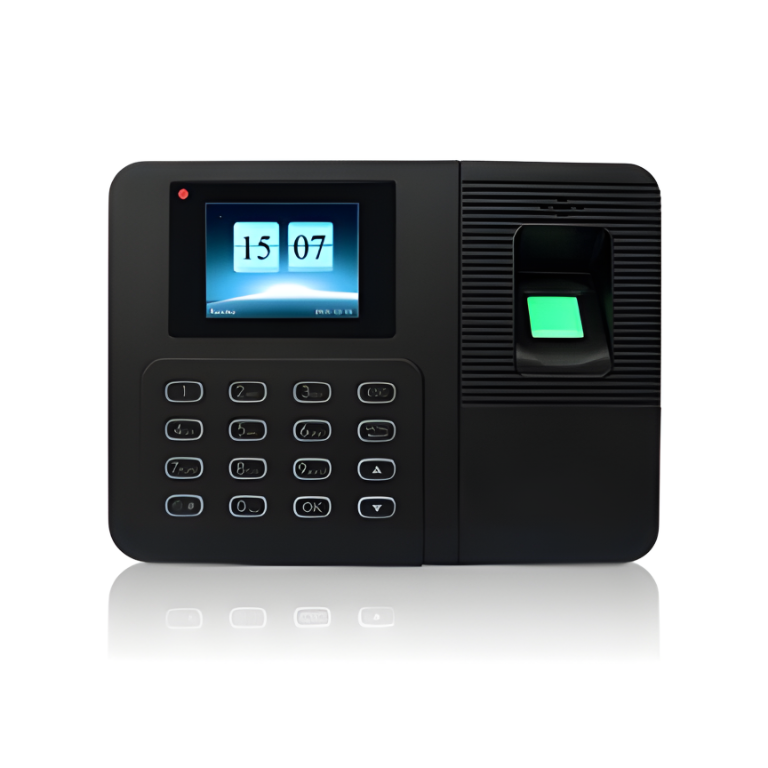
Rudhar Group supplies access control systems using fingerprint recognition (most common, reliable and cost-effective), face recognition (touchless, hygienic), iris recognition (highest accuracy for high-security zones), and palm vein recognition (contactless, very hygienic for food and pharma facilities). Non-biometric options include RFID cards and PIN keypads.

In 1:1 verification, the user presents a card or enters a PIN, and the system verifies their biometric matches the template on record for that specific identity. In 1:N identification, the user only presents their biometric and the system compares it against the entire enrolled database to find a match.

Yes. Rudhar Group biometric systems are supplied with management software that records all entry-exit events with timestamp and user identity. This data can be used for attendance management, overtime calculation and shift reporting. Integration with popular HR and payroll systems is available.

Access control systems from Rudhar Group include fail-safe and fail-secure options. A battery backup (typically 4-8 hours) maintains system operation during power cuts. Local memory in each reader stores up to 10,000-100,000 events offline when network connectivity is interrupted.

Entry-level biometric readers support 1,000-3,000 enrolled users. Mid-range enterprise systems support 10,000-50,000 users. Large-scale systems for industrial campuses can accommodate 100,000+ users with server-based management.

Rudhar Group standard biometric systems store biometric templates locally on the reader hardware or on an on-premises server, not in the cloud. Biometric templates are stored as mathematical feature vectors that cannot be reverse-engineered. Cloud-connected systems use AES-256 standard encryption complying with India Personal Data Protection norms.
Get a Quote