Quick answer: Automatic boom barriers in Delhi typically range from ₹35,000 to ₹1,20,000 for standard AC and commercial BLDC systems, reaching up to ₹2,50,000 or more for smart FASTag and ANPR integrated setups. Engineered for high ambient dust, summer temperatures, and heavy traffic, these barriers deliver 100% duty cycles, rapid 1.0 to 6.0-second operating speeds, and impact-resistant break-away arms for reliable 24/7 entry management.
Updated November 2026 · By Rudhar Group technical team · Plot No. 628, Pipeline Road, Puth Khurd Village, Bawana, Delhi 110039
Industrial logistics terminals, commercial business complexes, IT parks, and transit gateways across Delhi NCR face intense traffic density every day. From high-frequency freight movements in industrial corridors like Bawana, Narela, Okhla, and Mayapuri to high-density basement parking in Aerocity and Connaught Place, perimeter gates require access systems that eliminate bottlenecks without mechanical failure. Deploying a rugged automatic boom barrier system ensures authorized vehicular throughput, strict boundary regulation, and streamlined traffic control.
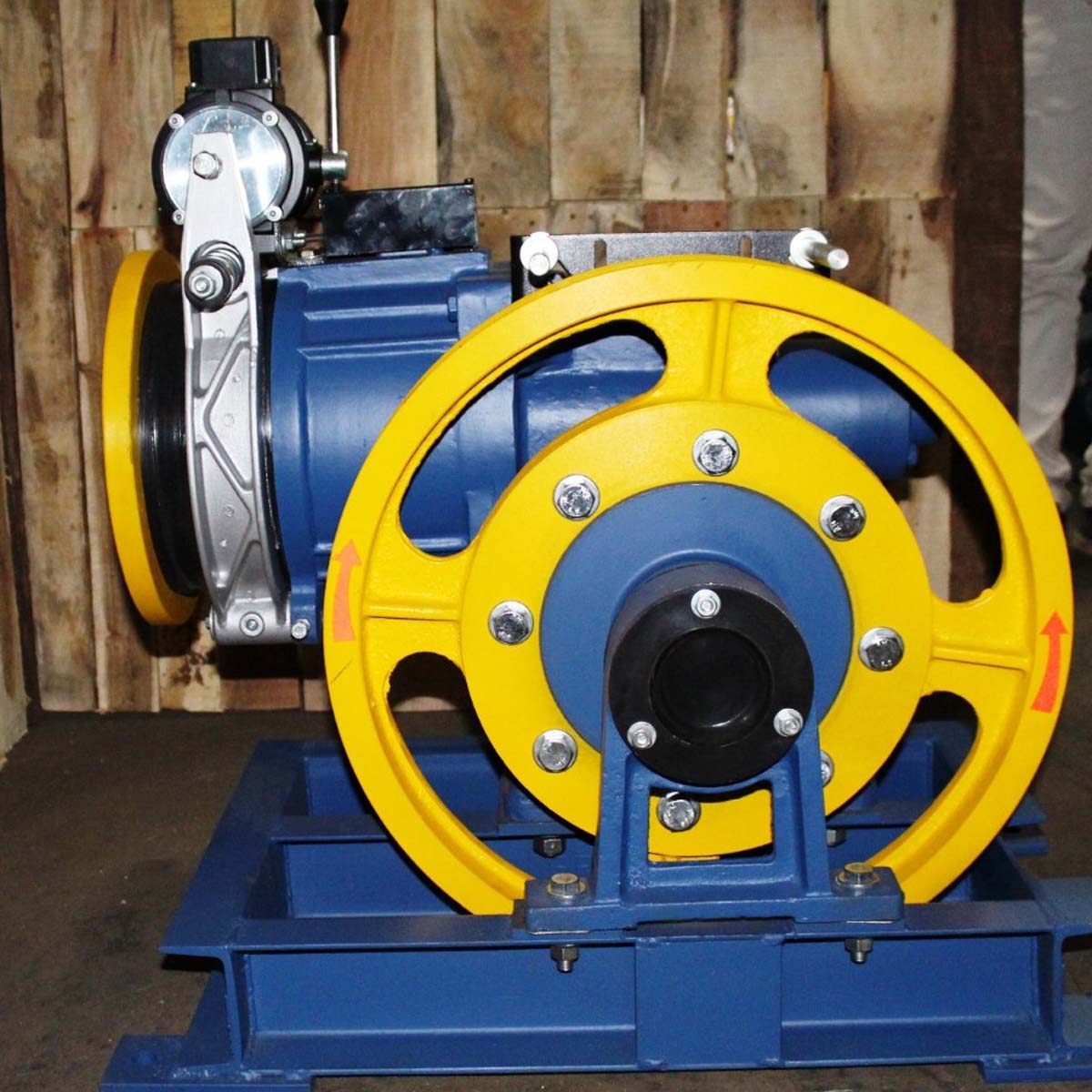
The operational environment in Delhi requires equipment engineered to withstand extreme ambient temperatures exceeding 45°C, high dust levels, and continuous duty cycles. Standard residential barrier arms often succumb to motor overheating, gearbox stripping, or frequent control-board faults when subjected to continuous operations. Specifying commercial-grade 24V DC brushless (BLDC) or heavy-duty AC drive units guarantees sustained operation under heavy load, backed by Mean Cycles Between Failures (MCBF) ratings ranging from 3 million to 5 million cycles.
Different facilities require specific barrier arm kinematics, deployment profiles, and speeds depending on lane width, ceiling clearance, and security requirements:
Industrial boom barriers are built to rigid mechanical and electrical standards to ensure continuous service in challenging industrial environments. The table below outlines standard performance specifications:
| Specification Parameter | Standard Commercial Barrier | High-Speed BLDC Barrier | Heavy-Duty Industrial Barrier |
|---|---|---|---|
| Arm Length | 3 m to 4.5 m (Rigid Profile) | 3 m to 4 m (Aerodynamic Elliptical) | 6 m to 8 m (Heavy Profile) |
| Operating Speed | 3.0 to 4.0 seconds | 1.0 to 1.5 seconds | 5.0 to 6.0 seconds |
| Drive Motor | 24V DC / AC Induction + Worm Gear | 24V DC Brushless (BLDC) Motor | Heavy-Duty AC Induction Motor |
| Duty Cycle Rating | 70% to 80% | 100% Continuous Duty | 100% Continuous Duty |
| Cabinet Housing | 1.5 mm to 2.0 mm Powder-Coated CRCA | 2.0 mm CRCA or SS304 Stainless Steel | 2.5 mm CRCA / SS316 Stainless Steel |
| Boom Arm Material | Extruded Aluminum with Bottom Rubber | Elliptical Aluminum + LED Strip | Octagonal Reinforced Aluminum Alloy |
| MCBF Reliability | 3 Million Cycles | 5 Million Cycles | 3 Million to 5 Million Cycles |
The cabinet housing is fabricated from 1.5 mm to 2.5 mm Cold-Rolled Close Annealed (CRCA) mild steel treated with electrostatic anti-corrosive powder coating, or 1.5 mm grade SS304/SS316 stainless steel to eliminate rust. Boom arms are extruded from lightweight, high-tensile aluminum alloy with elliptical or octagonal aerodynamic cross-sections that reduce wind resistance during rapid motion, fitted with cushioned rubber under-edges to protect vehicular finishes.
Modern access management demands total integration with electronic tolling and security protocols. Industrial boom barriers easily integrate with comprehensive access control systems to eliminate manual gatekeeper interventions:
Boom barrier capital outlays vary according to the drive technology, boom arm mechanism, and automation peripherals selected. Below are typical 2026 Delhi NCR approximate market price ranges for budgeting purposes:
| Barrier Configuration | Approximate Market Price Range | Key Features & Inclusions |
|---|---|---|
| Basic Automatic Barrier (3m–4m) | ₹35,000 – ₹55,000 | Standard AC motor, remote control, push-button terminal, single straight arm. |
| Commercial BLDC Barrier (4m–6m) | ₹55,000 – ₹1,20,000 | 24V BLDC motor, 100% duty cycle, loop detector interface, dual photocell safety. |
| Smart Integrated Barrier | ₹1,20,000 – ₹2,50,000 | High-speed motor, FASTag / UHF RFID reader or ANPR camera integration module. |
| High-Security / Anti-Crash Barrier | ₹3,50,000 – ₹8,00,000+ | Hydraulic drive, crash-rated steel core mechanism, severe impact resistance. |
| Replacement Aluminum Boom Arm | ₹4,000 – ₹10,000 | Standard extruded aluminum profile, rubber protective edge, optional LED channel. |
Note: All rates reflect baseline market estimates per unit, excluding 18% GST, specialized civil foundation work, and extended electrical cabling.
Before purchasing a vehicular access barrier for your Delhi facility, review this technical checklist with your facility engineering team:
Rudhar Group is an established industrial entrance automation manufacturer based in Delhi NCR. With over 25 years of engineering experience since our founding in 1998, we supply robust, ISO-certified access systems tailored for demanding environments across India.
Our manufacturing facility, located at Plot No. 628, Pipeline Road, Puth Khurd Village, Bawana, Delhi 110039, produces comprehensive perimeter access and entrance automation products. Rudhar's diverse product portfolio includes high-speed doors with opening speeds up to 2.5 m/s, Galvalume rolling shutters with AZ150 protective coatings, dock levelers with 6 to 15-ton capacities, dock shelters, industrial gates, security bollards, and specialized access control barriers.
By procuring directly from an established regional manufacturer, clients in Delhi NCR benefit from direct access to factory-trained service technicians, on-site civil saw-cutting and foundation casting, prompt spare parts availability (including quick-swap arms), and guaranteed turnaround times under comprehensive Annual Maintenance Contracts (AMC).
Ensure smooth vehicular flow and uncompromised perimeter security for your Delhi facility. Our technical site survey team assesses entry lane geometry, underground conduit routes, power availability, and traffic density to recommend the ideal boom barrier setup.
Contact our project engineering team today to schedule an on-site technical inspection or obtain an itemized project estimate. Reach Rudhar Group on Toll-Free: 1800-309-5166 or direct phone: +91 92181 09433.
Standard AC motor barriers typically operate at a 70% to 80% duty cycle and generate more heat during continuous use. In contrast, 24V DC Brushless (BLDC) motors offer a 100% continuous duty cycle, programmable opening speeds, significantly lower thermal wear, and an extended service life rated between 3 to 5 million cycles.
Yes, commercial boom barrier controllers feature plug-and-play interfaces for long-range UHF RFID readers, FASTag (ETC) decoders, and ANPR cameras. When an authorized vehicle approaches, the access controller triggers the barrier to open within 1.0 to 1.5 seconds, eliminating manual ticketing.
Industrial barriers are equipped with break-away arm mechanisms featuring shear pins that decouple on impact. This design prevents mechanical shocks from transferring to the internal drive gearbox and motor, confining damage to the aluminum arm which can be quickly swapped out.
During grid failures, boom barriers can be manually unlocked and cranked open using a mechanical key release. Additionally, 24V BLDC barrier models can be integrated with 24V DC battery backup modules or central online UPS systems to maintain automated operations without interruption.
For basement parking with vertical ceiling heights between 2.4 and 3.0 meters, an articulated (folding) arm barrier is required. The arm folds at a 90° or 180° knuckle joint as it raises, providing full lane clearance without striking structural beams, pipes, or ceiling fixtures.
Yes, Rudhar provides turnkey installation services across Delhi NCR, including casting concrete foundations, roadway saw-cutting for inductive ground loop detectors, conduit trenching, electrical termination, and ongoing AMC maintenance support.
Related: Boom Barrier · Contact Rudhar Group