Rolling Shutter Maintenance: The Checklist That Prevents Costly Breakdowns
Rolling Shutter Maintenance: The Checklist That Prevents Costly Breakdowns
By: Rudhar Group
Jul 04, 2022
Rolling Shutter Maintenance: The Checklist That Prevents Costly Breakdowns
A rolling shutter fails on the day it is most needed — at dispatch, during a downpour, or when the fire inspector arrives. Almost every emergency shutter breakdown is preceded by weeks of warning signs that nobody acted on. This maintenance guide covers what to check, how often, and which symptoms mean you should stop using the shutter immediately.
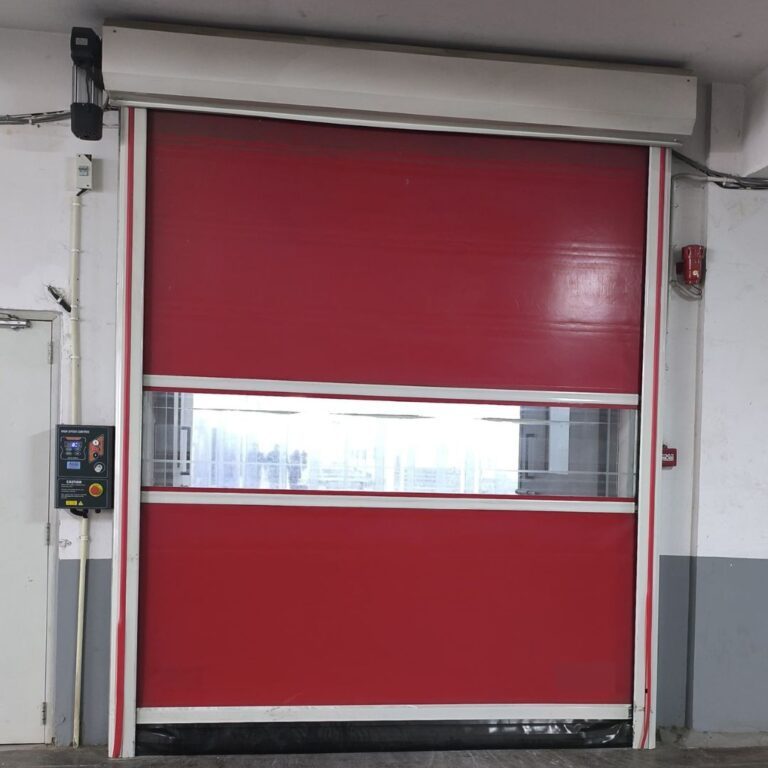
High Speed Doors for Warehouses, Factories & Cold Storage by Rudhar Group — manufactured and installed by Rudhar Group
Why Shutters Fail
Shutter failures cluster around a few root causes:
Guide rail misalignment — the curtain runs at an angle and grinds against the guides, wearing both
Spring fatigue — the counterbalance weakens over years, straining the motor until it burns out
Impact damage — a forklift knock bends slats or guides, and every subsequent cycle makes it worse
Corrosion — moisture, coastal air and chemical fumes attack slats, hinges and fasteners
Neglected lubrication — dry bearings and rollers accelerate wear on every component downstream
The Maintenance Schedule
Monthly — Operator Checks (5 minutes)
Operate the shutter fully and listen — grinding, screeching or knocking is a warning
Watch the curtain — does it run straight, or drift to one side?
Check for visible damage: bent slats, dented guides, loose bottom bar
Test the safety photocell by breaking the beam during closing — it must reverse
Confirm the emergency manual release works
Quarterly — Technician Service
Clean and lubricate guide rails, rollers and bearings
Check and adjust spring tension / counterbalance
Inspect fasteners, brackets and mounting points for looseness
Test motor current draw — rising current means increasing mechanical resistance
Inspect the curtain for slat wear, cracks and corrosion
Verify limit switch settings — the shutter must stop exactly at full open and full close
Annually — Full Inspection
Complete structural inspection of barrel, brackets and shaft
Motor and gearbox service
Electrical panel, wiring and control checks
Fire shutter release testing and documentation (for fire rated units)
Corrosion treatment and repainting where required
Warning Signs: Stop Using the Shutter Now
Some symptoms mean immediate shutdown until a technician inspects the unit:
The shutter drops or falls faster than normal when closing — a possible spring or brake failure, and a serious crushing hazard
Visible cracks in the barrel, brackets or shaft
The curtain jumps out of the guides during operation
The safety reversal does not work — the shutter continues closing on an obstruction
A burning smell or repeated tripping from the motor circuit
Small Habits That Extend Shutter Life
Never force a jammed shutter with the motor — find the cause first
Keep the floor track clear of debris, pallets and packaging
Train forklift operators to wait for a full open — clipping a partially open shutter is the #1 cause of damage
Fix small impact damage immediately; a bent guide costs little today and a curtain replacement tomorrow
Keep a maintenance log — it identifies recurring problems and supports warranty and audit requirements
Repair or Replace?
Repair makes sense for isolated damage on an otherwise sound unit. Consider replacement when: the motor has failed more than once, the curtain is corroded across multiple slats, the unit no longer meets your safety or fire requirements, or the door type is simply wrong for the traffic it now handles — many businesses outgrow a manual shutter and are better served by a high speed door or an insulated sectional door.
FAQ — Shutter Maintenance
How often should an industrial shutter be serviced?
Quarterly for normal industrial use; monthly for very high-cycle or harsh environments. Fire rated shutters have additional mandatory testing requirements.
My shutter is noisy — is that serious?
Noise means friction, and friction means wear. It may be as simple as dry guides needing lubrication, or as serious as a failing bearing. Get it checked before it becomes a breakdown.
Can I service a shutter myself?
Operator-level checks, yes. But spring tensioning is dangerous — a counterbalance spring stores enormous energy and has caused serious injuries. Leave spring and structural work to trained technicians.
About Rudhar Group
Rudhar Group has been manufacturing industrial doors, rolling shutters, gates and loading bay equipment since 1998, from our facility in Delhi NCR.
High speed doors manufactured by Rudhar operate at 1.5 to 3 metres per second.
We supply and install across Delhi NCR, Haryana, Punjab, Himachal Pradesh, Jammu & Kashmir, Uttar Pradesh, Madhya Pradesh and Rajasthan. Every unit is manufactured to the opening size supplied by the customer — share your site dimensions and location for a quotation.
Kya dhyan rakhein
Shutter maintenance is cheap; shutter failure is not. A simple monthly walk-around plus a quarterly technician visit prevents almost every emergency callout. Contact Rudhar Group for annual maintenance contracts, repairs and upgrades across rolling shutters, high speed doors and entrance automation.